


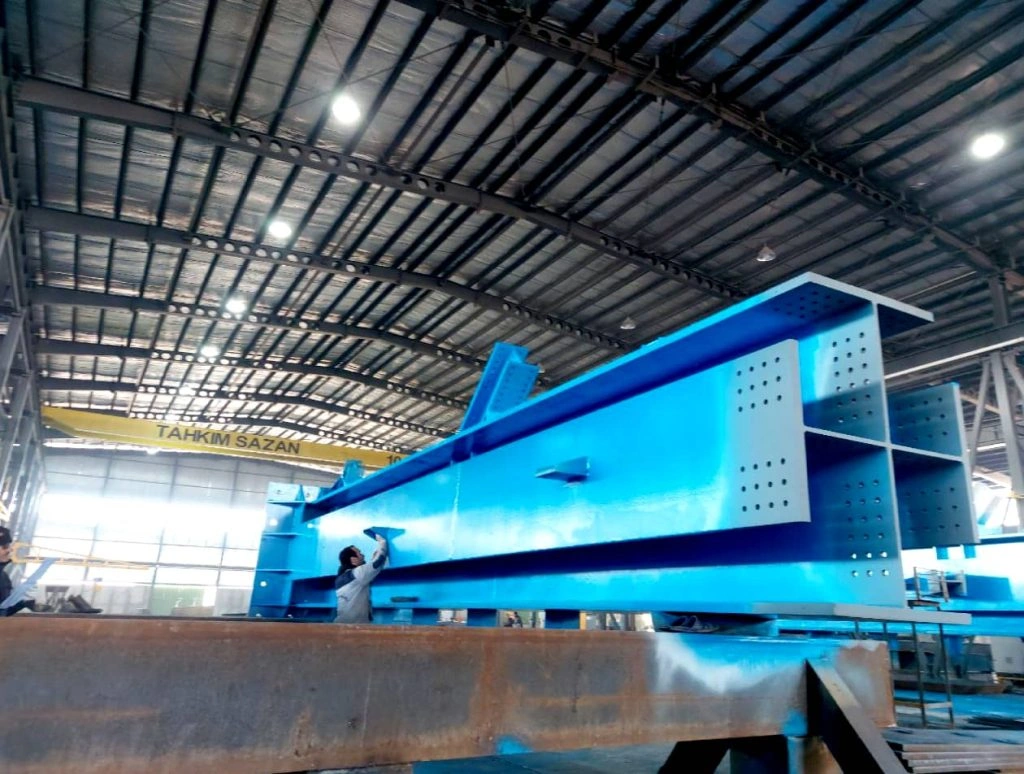
As you know, structures and buildings worldwide can be constructed using either steel or concrete frameworks.
The question, however, is: which type is more cost-effective and offers superior strength?
In this article, we aim to examine the advantages and disadvantages of both concrete and steel structures.
A primary advantage of steel structures—specifically those utilizing hot-rolled steel plates—is the rapid pace of construction;
steel framing allows for the simultaneous construction of multiple stories, thereby accelerating project completion and return on investment,
whereas concrete structures require each floor to be built sequentially.
High Strength: Structures utilizing hot-rolled steel sheets (black steel) possess exceptional strength and can support heavier loads.
Consequently, they offer superior resistance to natural forces such as wind and earthquakes—a level of resilience not found in standard steel frames.
Low Weight: Steel framing reduces the overall weight of the structure, whereas concrete structures require a large volume of heavy materials, which also consumes more interior space.
A notable disadvantage of steel structures is their limited resistance to high temperatures; while hot-rolled steel is non-combustible, it completely loses its structural integrity at 650°C.
Another factor is financing: since the steel framework is fabricated and installed as a complete unit, the associated costs must be covered upfront in a lump sum.
